Technical guide to M6 dimensions with geometry and standards context. The article expands practical use context, reference-standard linkage, and selection criteria with an engineering-oriented flow. Material grade, installation condition, and dimension parameters are interpreted together for consistent decision making. This section expands the practical context by linking use-cases, corrosion environment, and material class selection (A2/A4) to technical decision flow. In practice, diameter, length, thread form, and head type should be selected together, while installation controls such as tightening torque, bearing surface condition, washer usage, and thread-lock strategy are reviewed as a combined system. DIN/ISO reference mapping is used to interpret key dimension parameters with a production-oriented perspective.
Practical notes on pitch, nominal diameter, and tolerance context. The article expands practical use context, reference-standard linkage, and selection criteria with an engineering-oriented flow. Material grade, installation condition, and dimension parameters are interpreted together for consistent decision making. This section expands the practical context by linking use-cases, corrosion environment, and material class selection (A2/A4) to technical decision flow. In practice, diameter, length, thread form, and head type should be selected together, while installation controls such as tightening torque, bearing surface condition, washer usage, and thread-lock strategy are reviewed as a combined system. DIN/ISO reference mapping is used to interpret key dimension parameters with a production-oriented perspective.
How to compare ISO 4762 and DIN 912 references in technical workflows. The article expands practical use context, reference-standard linkage, and selection criteria with an engineering-oriented flow. Material grade, installation condition, and dimension parameters are interpreted together for consistent decision making. This section expands the practical context by linking use-cases, corrosion environment, and material class selection (A2/A4) to technical decision flow. In practice, diameter, length, thread form, and head type should be selected together, while installation controls such as tightening torque, bearing surface condition, washer usage, and thread-lock strategy are reviewed as a combined system. DIN/ISO reference mapping is used to interpret key dimension parameters with a production-oriented perspective.
Geometry and application-focused technical notes for DIN 7981. The article expands practical use context, reference-standard linkage, and selection criteria with an engineering-oriented flow. Material grade, installation condition, and dimension parameters are interpreted together for consistent decision making. This section expands the practical context by linking use-cases, corrosion environment, and material class selection (A2/A4) to technical decision flow. In practice, diameter, length, thread form, and head type should be selected together, while installation controls such as tightening torque, bearing surface condition, washer usage, and thread-lock strategy are reviewed as a combined system. DIN/ISO reference mapping is used to interpret key dimension parameters with a production-oriented perspective.
Hex socket head geometry and dimension-table reading basics. The article expands practical use context, reference-standard linkage, and selection criteria with an engineering-oriented flow. Material grade, installation condition, and dimension parameters are interpreted together for consistent decision making. This section expands the practical context by linking use-cases, corrosion environment, and material class selection (A2/A4) to technical decision flow. In practice, diameter, length, thread form, and head type should be selected together, while installation controls such as tightening torque, bearing surface condition, washer usage, and thread-lock strategy are reviewed as a combined system. DIN/ISO reference mapping is used to interpret key dimension parameters with a production-oriented perspective.
Key DIN 933 dimension parameters and table interpretation notes. The article expands practical use context, reference-standard linkage, and selection criteria with an engineering-oriented flow. Material grade, installation condition, and dimension parameters are interpreted together for consistent decision making. This section expands the practical context by linking use-cases, corrosion environment, and material class selection (A2/A4) to technical decision flow. In practice, diameter, length, thread form, and head type should be selected together, while installation controls such as tightening torque, bearing surface condition, washer usage, and thread-lock strategy are reviewed as a combined system. DIN/ISO reference mapping is used to interpret key dimension parameters with a production-oriented perspective.
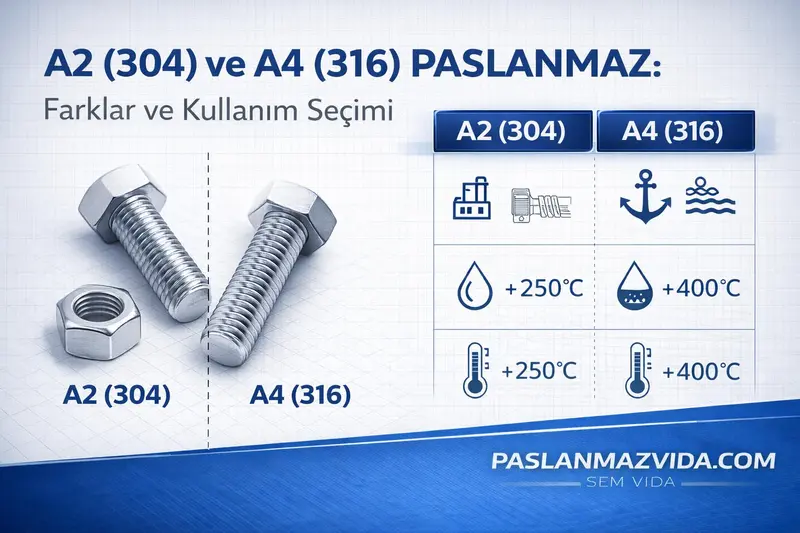
A2 (304) vs A4 (316) Stainless: Differences and Selection
Compares A2 and A4 grades for environment-based selection. The article expands practical use context, reference-standard linkage, and selection criteria with an engineering-oriented flow. Material grade, installation condition, and dimension parameters are interpreted together for consistent decision making. This section expands the practical context by linking use-cases, corrosion environment, and material class selection (A2/A4) to technical decision flow. In practice, diameter, length, thread form, and head type should be selected together, while installation controls such as tightening torque, bearing surface condition, washer usage, and thread-lock strategy are reviewed as a combined system. DIN/ISO reference mapping is used to interpret key dimension parameters with a production-oriented perspective.
Explains why DIN/ISO references matter for technical alignment. The article expands practical use context, reference-standard linkage, and selection criteria with an engineering-oriented flow. Material grade, installation condition, and dimension parameters are interpreted together for consistent decision making. This section expands the practical context by linking use-cases, corrosion environment, and material class selection (A2/A4) to technical decision flow. In practice, diameter, length, thread form, and head type should be selected together, while installation controls such as tightening torque, bearing surface condition, washer usage, and thread-lock strategy are reviewed as a combined system. DIN/ISO reference mapping is used to interpret key dimension parameters with a production-oriented perspective.
Screw Head Types: Pan, Hex, Torx, and Hex Socket Guide
Head and drive form selection notes for assembly performance. The article expands practical use context, reference-standard linkage, and selection criteria with an engineering-oriented flow. Material grade, installation condition, and dimension parameters are interpreted together for consistent decision making. This section expands the practical context by linking use-cases, corrosion environment, and material class selection (A2/A4) to technical decision flow. In practice, diameter, length, thread form, and head type should be selected together, while installation controls such as tightening torque, bearing surface condition, washer usage, and thread-lock strategy are reviewed as a combined system. DIN/ISO reference mapping is used to interpret key dimension parameters with a production-oriented perspective.
Thread Types: Metric vs Sheet Metal vs Chipboard vs Hi-Lo
Compares major thread forms by application behavior. The article expands practical use context, reference-standard linkage, and selection criteria with an engineering-oriented flow. Material grade, installation condition, and dimension parameters are interpreted together for consistent decision making. This section expands the practical context by linking use-cases, corrosion environment, and material class selection (A2/A4) to technical decision flow. In practice, diameter, length, thread form, and head type should be selected together, while installation controls such as tightening torque, bearing surface condition, washer usage, and thread-lock strategy are reviewed as a combined system. DIN/ISO reference mapping is used to interpret key dimension parameters with a production-oriented perspective.
Overview of process cleaning, passivation, and inspection planning. The article expands practical use context, reference-standard linkage, and selection criteria with an engineering-oriented flow. Material grade, installation condition, and dimension parameters are interpreted together for consistent decision making. This section expands the practical context by linking use-cases, corrosion environment, and material class selection (A2/A4) to technical decision flow. In practice, diameter, length, thread form, and head type should be selected together, while installation controls such as tightening torque, bearing surface condition, washer usage, and thread-lock strategy are reviewed as a combined system. DIN/ISO reference mapping is used to interpret key dimension parameters with a production-oriented perspective.
Installation-focused notes on torque control and damage prevention. The article expands practical use context, reference-standard linkage, and selection criteria with an engineering-oriented flow. Material grade, installation condition, and dimension parameters are interpreted together for consistent decision making. This section expands the practical context by linking use-cases, corrosion environment, and material class selection (A2/A4) to technical decision flow. In practice, diameter, length, thread form, and head type should be selected together, while installation controls such as tightening torque, bearing surface condition, washer usage, and thread-lock strategy are reviewed as a combined system. DIN/ISO reference mapping is used to interpret key dimension parameters with a production-oriented perspective.
Corporate technical knowledge center for DIN/ISO references, dimension tables, thread calculation, and measurement-focused fastener topics.
This section expands the practical context by linking use-cases, corrosion environment, and material class selection (A2/A4) to technical decision flow. In practice, diameter, length, thread form, and head type should be selected together, while installation controls such as tightening torque, bearing surface condition, washer usage, and thread-lock strategy are reviewed as a combined system.
DIN/ISO reference mapping is used to interpret key dimension parameters with a production-oriented perspective.